
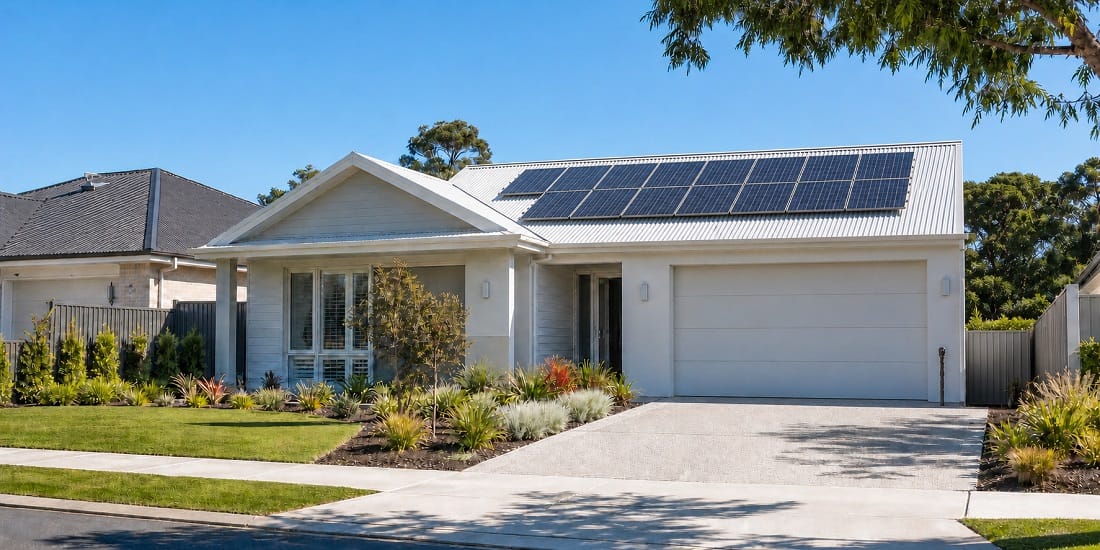
Have you ever thought about building a home that is less reliant on the grid?
For some homeowners in Busselton and the Southwest, that means installing solar panels and reducing power bills. For others, it means creating a home that is more efficient, more comfortable year-round, and better prepared for the future.
The good news is that you do not need to go fully off grid to make a real difference. In most cases, the best results come from designing a home that works well first, then supporting it with the right solar setup.
If you are planning on building a new home in the Southwest, here are the main things to think about.
Solar-powered does not always mean off-grid
A lot of people use these terms interchangeably, but they are not the same thing.
A solar-powered home usually still stays connected to normal electrical services. It uses solar panels to generate electricity during the day and may also include battery storage to make better use of that power.
A fully off-grid home is different. It is designed to operate without relying on the standard electricity network at all. In rural or remote parts of the Southwest, going fully off grid may make sense. But for many Busselton homeowners, a solar-ready or solar-supported home is the more practical option.
That usually means:
- solar panels
- battery storage
- backup power planning
- careful energy management
- sometimes broader planning around water and waste systems as well
Roof design matters more than many people realise
If solar performance is important to you, the roof should be planned with that in mind early in the design stage.
A roof with large, usable sections and fewer interruptions will usually make solar installation easier and more effective. In the Southwest, where there is generally strong sunlight, roof design can have a big impact on how well your system performs.
Things to consider include:
- roof orientation for maximum sun exposure
- shading from nearby trees or neighbouring structures
- uninterrupted roof space for solar panels
- roof pitch
- placement of vents and other roof elements
- space for inverter and battery installation
The more suitable the roof is for solar, the easier it is to design a system that performs well over time.
The climate still plays a big role
A solar-powered home in the Southwest should not just be about generating power. It should also be about reducing the amount of energy the home needs in the first place. This is where passive design is important. Natural light, ventilation, shading, and thermal performance all help shape how comfortable the home feels and how hard it needs to work mechanically.
Design still needs to respond to local conditions such as:
- sun exposure
- seasonal temperature changes
- natural airflow
- the position of the home on the block
- indoor-outdoor living needs
Think about the full picture, not just going off grid
While going fully off the grid might sound appealing, it is not always necessary. For many people in Busselton and the Southwest, the better goal is to reduce dependence.
This approach can still deliver many of the benefits people are looking for, without the added complexity of building an entirely off-grid home.
It helps to think about the bigger picture from the start, including:
- how the home is positioned on the block
- how the roof is designed
- how much energy the home is likely to use
- how it handles heat, light and airflow
- how future-ready the electrical planning is
- how the home will support your day-to-day lifestyle
In many cases, a smart, efficient home with a well-planned solar setup is a better long-term solution than chasing complete independence from the grid. The strongest outcomes usually come from combining good design with the right level of technology, rather than relying on one solution alone.
Additional resources: https://www.energy.gov.au/households/solar-pv-and-batteries